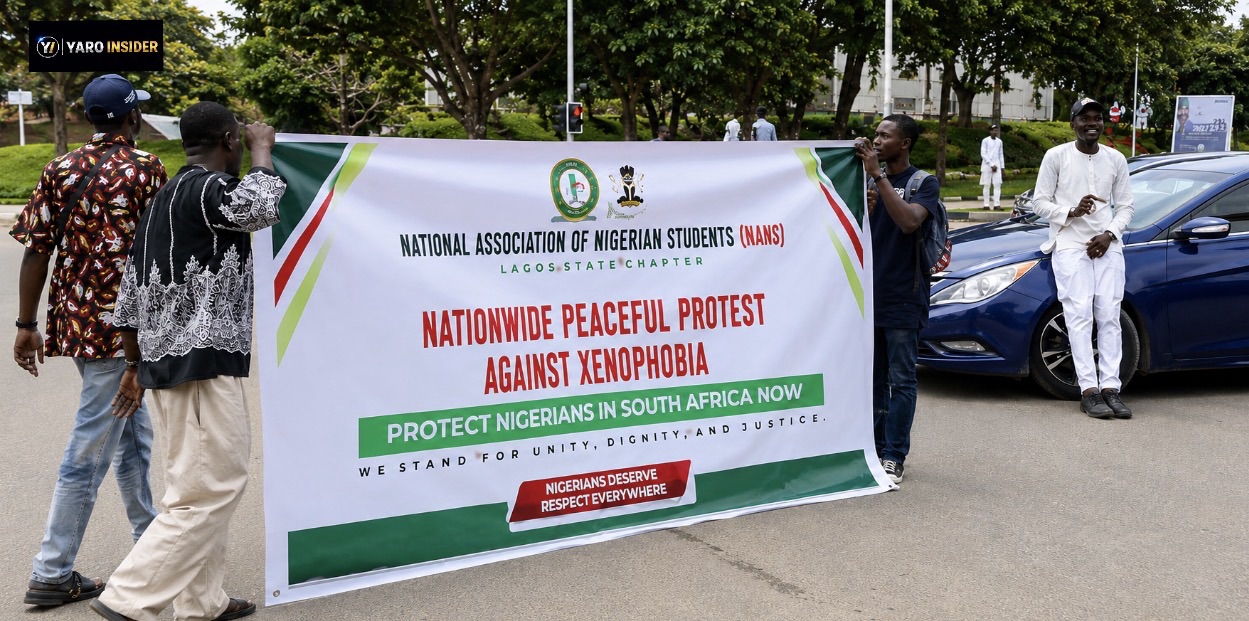
A group of Nigerian university students has staged a protest demanding the exit of MTN and other South African-linked businesses from Nigeria amid renewed concerns over the treatment of Nigerians in South Africa. Videos and images from the demonstration have circulated online, reigniting debate over economic relations between Africa’s two largest economies.
Here are five key things to know about the protest.
The protest was linked to xenophobia concerns
The demonstration was reportedly triggered by anger over alleged xenophobic attacks and hostility toward Nigerians living in South Africa.
Protesters carried placards and chanted slogans calling for stronger action against South African interests operating in Nigeria.
MTN became a symbol of the dispute
Although MTN Nigeria is a separate corporate entity operating under Nigerian regulations, protesters focused on the telecom giant because of its South African origins.
The company has previously appealed to Nigerians not to direct frustrations over events in South Africa toward its Nigerian operations.
Similar calls have emerged before
This is not the first time South African companies have become the focus of public anger in Nigeria.
In recent months, some politicians and activists have called for measures against MTN and other South African-owned businesses following reports of attacks on Nigerians abroad.
Economic consequences remain a major concern
Critics of the “MTN must go” campaign argue that any action against major investors could affect jobs and business activities in Nigeria.
MTN is one of the country’s largest telecommunications operators, serving millions of subscribers and employing thousands of Nigerians directly and indirectly.
No official government action has been announced
Despite the protests and online campaigns, there has been no official announcement from the Nigerian government indicating plans to remove MTN or other South African companies from the country.
The debate remains largely political and public-driven, with authorities yet to announce any policy response linked to the latest demonstrations.
Why it matters
The controversy highlights the delicate relationship between Nigeria and South Africa, two countries whose economic ties remain significant despite periodic diplomatic tensions.
While public frustration over the treatment of Nigerians abroad continues to generate strong reactions, policymakers face the challenge of balancing diplomatic concerns with the economic benefits created by cross-border investments.