
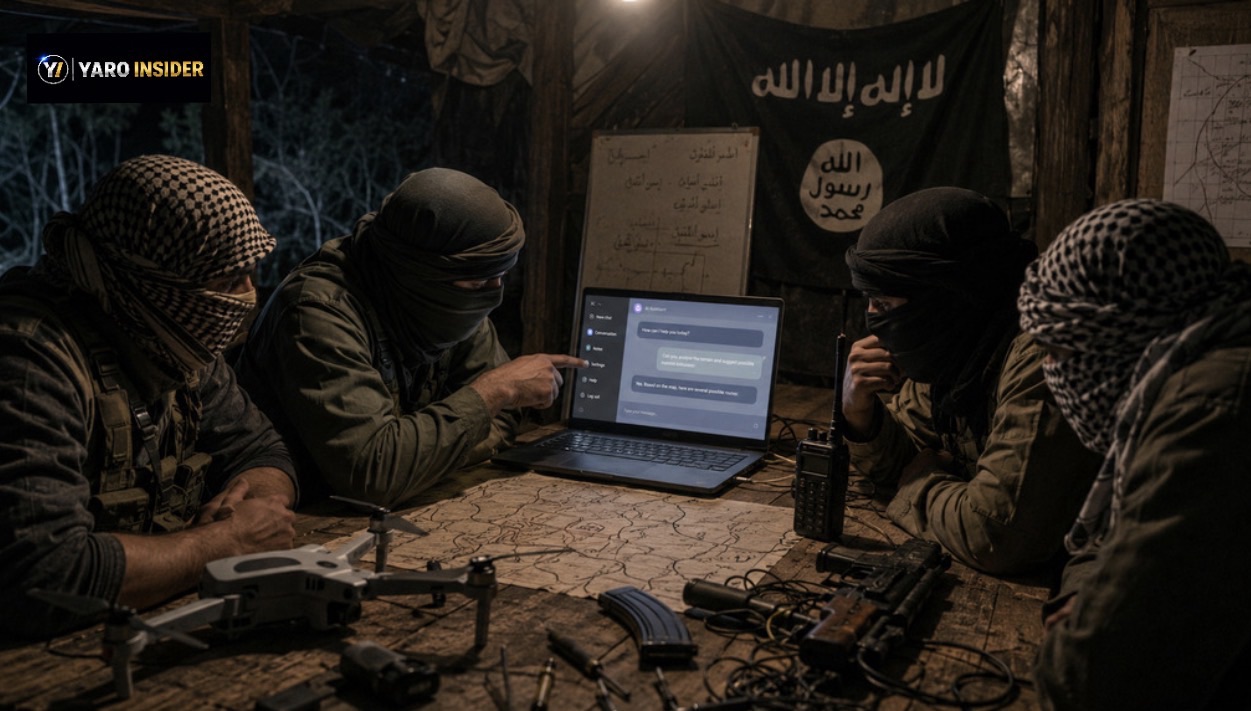
A new research report has raised concerns among security experts after revealing that members of Boko Haram have reportedly been using artificial intelligence tools, including ChatGPT and other advanced AI systems, to support various aspects of their operations.
The findings come from a study by the Cambridge Programme on AI Science and Policy, which examined how extremist groups are adapting to rapidly evolving technologies. According to the report, Boko Haram members have allegedly used AI-powered tools for activities ranging from operational planning and logistics to troubleshooting weapons and drone-related tasks.
Researchers behind the study conducted dozens of interviews with former Boko Haram members in Nigeria’s northeast, including individuals who reportedly served as commanders, bomb-makers, engineers and technical specialists within the insurgent group. Their testimonies covered activities between 2023 and 2025 and provided rare insight into how militants are interacting with emerging technologies.
The report highlights a growing concern within global security circles: that artificial intelligence is lowering the barriers to accessing sophisticated knowledge and capabilities that were once difficult for non-state actors to obtain. While AI tools are designed for legitimate purposes such as education, research and productivity, experts have increasingly warned that extremist organizations could attempt to exploit them for harmful objectives.
Security analysts note that terrorist organizations have historically adapted quickly to new technologies. From social media and encrypted messaging platforms to commercial drones, militant groups have repeatedly demonstrated an ability to incorporate widely available digital tools into their operations. Recent assessments have suggested that groups operating in Nigeria and the wider Sahel region are increasingly embracing digital technologies for communication, recruitment and propaganda.
The emergence of AI within that ecosystem presents a new challenge for governments and technology companies alike. Experts warn that while AI can deliver significant benefits to society, it can also be misused by criminal and extremist actors seeking to improve efficiency, spread propaganda or enhance operational capabilities.
For Nigeria, the development adds another layer to an already complex security environment. Boko Haram and its splinter factions have waged a violent insurgency across parts of northeastern Nigeria and the Lake Chad region for more than a decade, causing thousands of deaths and displacing millions of people. Despite military operations and counterterrorism campaigns, security agencies continue to face evolving threats from insurgent groups adapting to new realities.
The Cambridge report is likely to intensify discussions about how governments, researchers and technology firms can prevent advanced AI systems from being exploited by malicious actors while preserving their legitimate uses.
As artificial intelligence becomes more powerful and accessible, security experts say the challenge will not only be combating terrorism on the battlefield but also addressing the digital tools that could shape the next generation of security threats.